Cyberpsychosis Is Real — No Implants Required

There's a string of side missions in Cyberpunk 2077 that most players remember long after the main story fades. Your fixer, Regina Jones, keeps calling with the same basic setup: someone in Night City went too far with the cyberware and snapped. Your job is to go deal with them.
They're called Cyberpsycho Sightings. There are seventeen of them scattered across the city, and each one tells a different story about the same thing. A military vet who kept upgrading after the war because civilian life felt too slow. A corpo netrunner who couldn't stop optimizing. A former paramedic whose augmented reflexes made normal human interaction feel unbearable.
Every one of them started with a reasonable upgrade. Every one of them kept going because each piece of chrome made them faster and more capable. Every one of them crossed a line they didn't see until it was behind them.
The game calls it cyberpsychosis, a dissociative disorder caused by overloading your body with cybernetic augmentations. The lore is specific about the symptoms: you stop sleeping. You distance yourself from friends and family. Things that used to bring you pleasure (food, socializing, just existing in your own body) lose their appeal. Human interactions start to feel slow and irritating. You identify more with the machine than the person you used to be.
In the anime Cyberpunk: Edgerunners, a kid named David Martinez gets his first military-grade Sandevistan after his mother dies. The spinal implant lets him move so fast the world blurs around him. His friends beg him to slow down. His ripper doc warns him about the toll. He keeps slotting more chrome anyway, chasing bigger jobs, pushing harder, because the power feels too necessary to give up. By the end, he can barely hold a conversation. He never takes off his mother's jacket. It's the last piece of who he used to be.
CD Projekt Red set this in 2077. They were off by about fifty years.
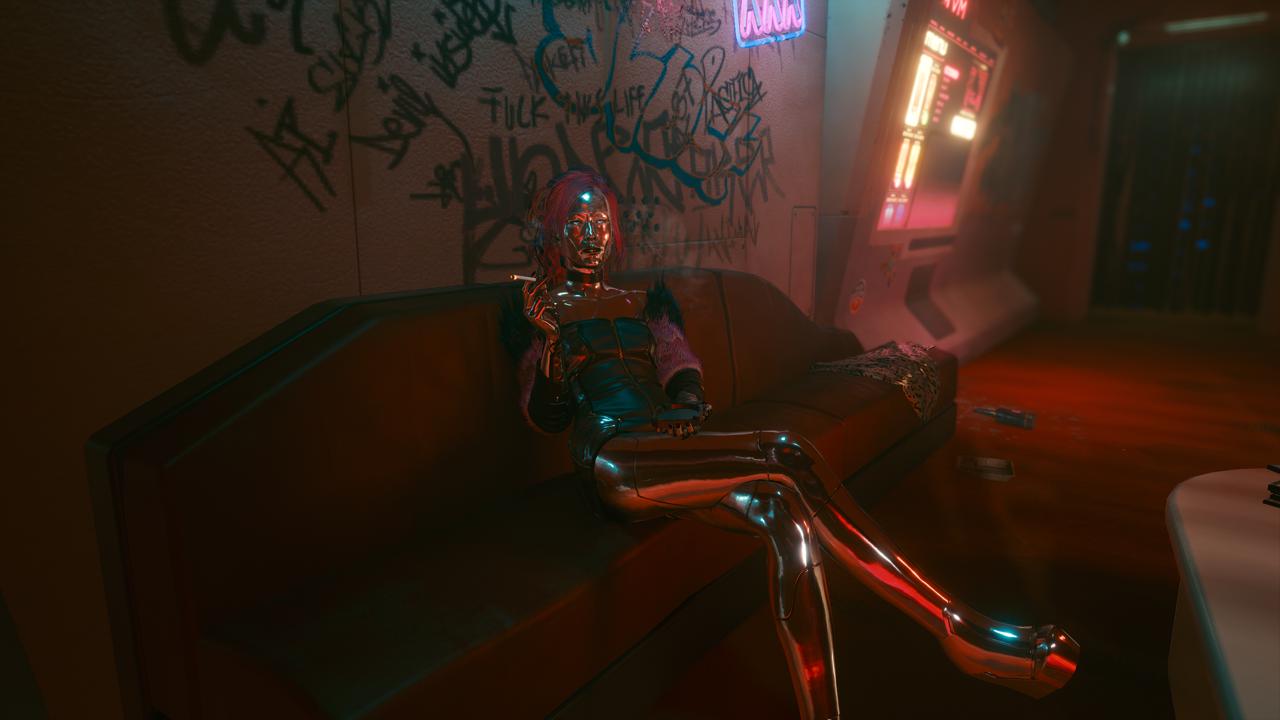
The Loop
There's a moment every developer who has coded with AI remembers. The first time you described something you wanted to build and watched it materialize in seconds. Not a toy. Not a demo. A real, working thing that would have taken you days or weeks to write by hand.
That moment rewires something.
Software developer Armin Ronacher, creator of the Flask web framework and one of the most respected voices in the Python ecosystem, described what happened next in a post he titled "Agent Psychosis":
"When [I first got] hooked on Claude, I did not sleep. I spent two months excessively prompting the thing and wasting tokens. I ended up building and building and creating a ton of tools I did not end up using much."
Two months. No sleep. One of the most experienced developers in the industry, someone who has shipped tools used by millions, caught in a loop he couldn't break.
He's not alone. Tim O'Brien wrote about spending two hours arguing with an AI about whether audio files should be identified by filenames or hexadecimal hash strings, then realizing he had no way to explain what he does for a living at a dinner party anymore. On Reddit's r/vibecoding community, one poster described coding 7 to 10 hours a day, seven days a week, for two straight months before hitting a wall so hard they couldn't start a single task. The replies were full of people saying the same thing had happened to them.
The feedback loop works like this: you have an idea, you describe it to an AI, you see it come alive almost instantly, and that instant gratification makes you more creative, which generates more ideas, which you immediately feed back into the machine. The gap between imagination and reality collapses to near zero. Each cycle releases a hit of dopamine. Each hit makes the next cycle harder to resist.
Jeremy Howard at fast.ai published a piece in January 2026 calling this phenomenon "dark flow," borrowing a term from gambling addiction research. Regular flow, the kind psychologist Mihaly Csikszentmihalyi described in the 1970s, happens when your skills are matched to a real challenge and you're getting clear feedback on your performance. Dark flow mimics that feeling while actually undermining it. Like multiline slot machines that play celebratory sounds when you lose money, AI coding tools create the sensation of winning (shipping features, closing tickets, watching your project grow) while quietly eroding the foundations underneath. Code you didn't write. Architecture you didn't think through. Decisions you never actually made.
Dropping Out of Lightspeed
Then the machine stops cooperating.
Maybe the AI hallucinates a function that doesn't exist. Maybe your carefully prompted architecture falls apart under real-world conditions. Maybe the API goes down and you're staring at your own codebase like it was written by a stranger. Because in a meaningful sense, it was.
It's like a spaceship jerking out of lightspeed. One moment you're crossing parsecs in seconds, the universe a smear of light around you. The next, the hyperdrive is offline and you're limping forward on conventional engines, watching stars crawl past the viewport. The contrast is almost physically painful.
This is where the withdrawal hits. Not the mild inconvenience of switching tools. An actual, measurable frustration response. A paper in the Asian Journal of Psychiatry proposed "Generative AI Addiction Syndrome" as a formal behavioral disorder in 2025, noting that affected individuals struggle to limit AI interaction despite negative consequences, and that attempts to reduce usage lead to anxiety, irritability, and restlessness. The clinical language is dry. The experience is not.
You know the feeling if you've been there. The AI gives you a wrong answer and you feel a flash of genuine anger, not at the tool, but at the interruption. You have to go back to reading documentation, tracing logic, debugging line by line. The meatspace way. It feels unbearably slow, like trying to run underwater. And the whole time, there's a voice in your head whispering that you're falling behind.
The Race Against Nobody
That last part might be the most insidious symptom. The feeling of urgency with no clear source.
Nobody is chasing you. There's no leaderboard. No competitor about to ship the thing you're building. But the acceleration of the tools creates its own pressure. If Claude can help you build in a weekend what used to take a month, then every weekend you don't build is a month wasted. If other developers are shipping 10, 20, 30 pull requests a day (and according to Boris Cherny in a recent interview on Lenny's Podcast, some engineers at Anthropic are doing exactly that), then your three-PR week starts to feel like standing still.
This is FOMO operating at a neurological level. It's not about missing a trend or a party. It's the deep, primate-brain conviction that the pack is moving and you're being left behind. The tools are getting better every month. The people using them are getting faster. The window is closing. You have to ship now.
None of this is rational and all of it feels completely real.
The Humanity Tab
In Night City, the symptoms of cyberpsychosis follow a specific progression. First, you stop taking care of yourself. Then you stop connecting with people. Then human interaction becomes irritating. Then it becomes contempt.
The progression for AI-augmented developers is less dramatic but structurally identical.
You skip dinner because you're in the middle of a prompt chain. You half-listen to a conversation because your mind is still debugging an architecture problem. Your partner tells you about their day and you're mentally composing a system prompt. The people around you haven't changed. You have. The machine pace has become your baseline, and everything operating at human speed feels like lag.
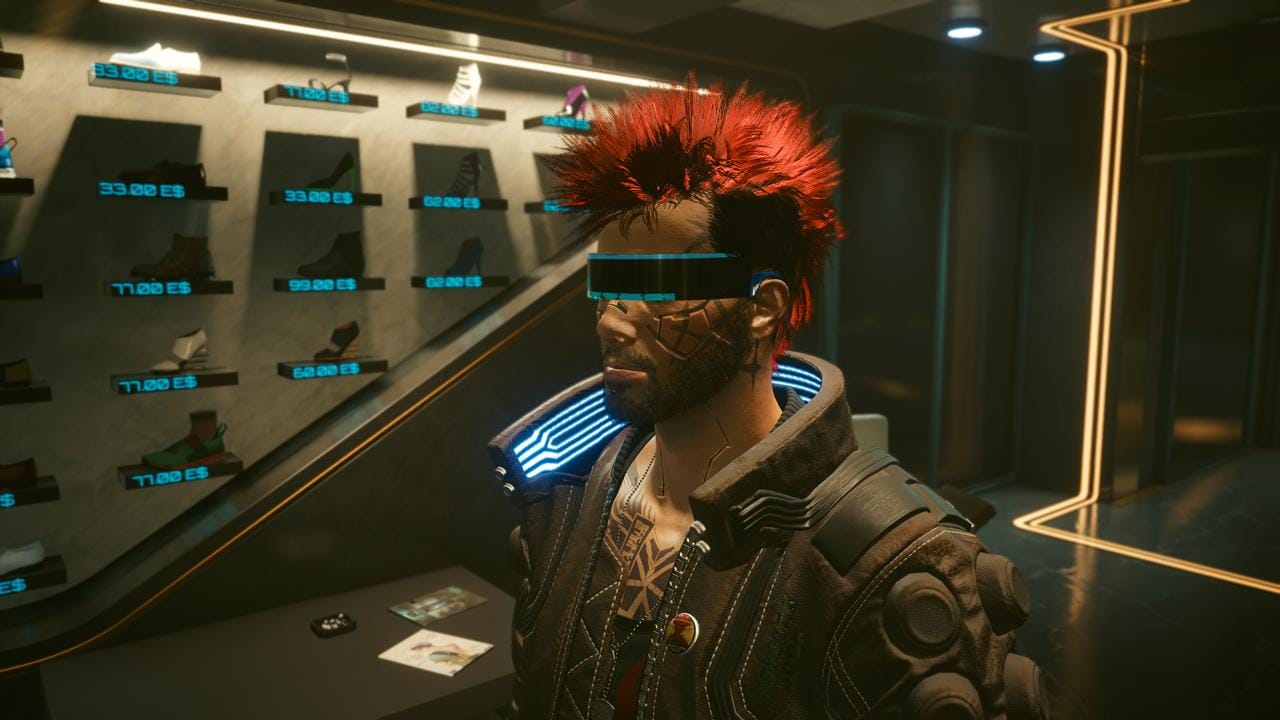
Remember David Martinez's jacket. He never took it off — not through the upgrades, not through the jobs, not through the descent. It was the last human thing about him, and he held onto it even as everything else was replaced. That's the detail that makes Edgerunners devastating. Not the power fantasy. The way it makes you watch someone lose themselves while clutching the one thing that still connects them to who they were.
The jacket is whatever you're still holding onto. The morning run you keep promising to restart. The friend you keep meaning to call back. The meal you keep eating at your desk while staring at a terminal.
No Cure, But Treatment
In the Cyberpunk lore, there's no real cure for cyberpsychosis. Removing implants can slow the descent, but once you've crossed a certain threshold, the damage is structural. The person you were doesn't fully come back.
That's bleaker than reality warrants, but the core insight holds: you can't just stop. Not because the tools are bad. They're powerful, and they're getting more powerful every month. The problem isn't AI-assisted development. The problem is that the human nervous system wasn't built for a feedback loop this tight, and nobody handed us a manual for managing it.
The fast.ai piece ends with practical advice: set boundaries on session length, review AI-generated code line by line, maintain your own skills independent of the tools. It's sensible and correct and sounds a lot like "just put down the Sandevistan, David."
The harder truth is that this requires the same thing every compulsive behavior requires: the willingness to be slower than you could be. To close the laptop when the next feature is right there. To choose the human-speed version of your life even when the machine-speed version is available.
That's not a technical problem. It's a human one.
And if you're reading this at 2 AM with six terminal tabs open and a half-eaten sandwich going stale next to your keyboard, you already know which version you're living in.
Sources:
- Armin Ronacher, "Agent Psychosis" (January 2026)
- Jeremy Howard / fast.ai, "Breaking the Spell of Vibe Coding" (January 2026)
- Tim O'Brien, "I Argued With an AI for Two Hours Today" (February 2026)
- Boris Cherny on Lenny's Podcast, "Claude Code" (February 2026)
- "Generative Artificial Intelligence Addiction Syndrome: A New Behavioral Disorder?" — Asian Journal of Psychiatry (2025)
- r/vibecoding, "Does anyone get burnout from vibe-coding?" (February 2026)
- CD Projekt Red, Cyberpunk 2077 (2020) / Studio Trigger, Cyberpunk: Edgerunners (2022)