The Signal — July 9, 2026
The major model labs are in a full sprint this week. OpenAI's biggest public launch yet lands today, xAI undercut everyone on price yesterday, and Anthropic published interpretability work that's drawing comparisons to theories of consciousness.
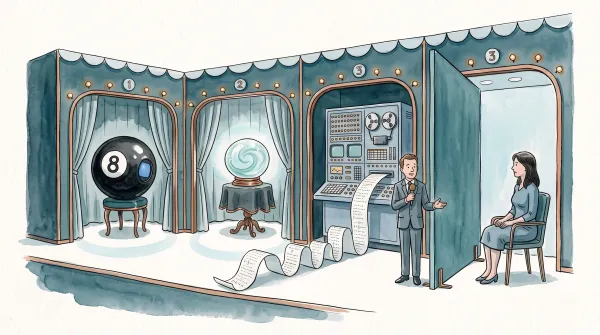
OpenAI Launches GPT-5.6 Sol, Terra, and Luna to the Public
OpenAI's GPT-5.6 model family (Sol, Terra, and Luna) goes live today, July 9, marking the company's widest model deployment to date. The launch follows reported government permission from the US Department of Commerce, which had previously limited access to the models during an initial evaluation period.
Sol is the flagship, with Terra and Luna serving as smaller, faster variants aimed at different use cases and price points. OpenAI's documentation positions the family as a large capability jump over the GPT-5.5 generation. The staggered rollout, first to government and safety partners and now to the general public, reflects the increasingly common pattern of gated releases for frontier models.
The timing is notable: xAI launched Grok 4.5 just yesterday, meaning OpenAI's public launch lands in a market that's already digesting a new competitor. Whether that was strategic or coincidental, it compresses the news cycle for both announcements.
Sources: CNBC · Neowin · OpenAI Help Center · Techmeme
xAI Launches Grok 4.5 and Undercuts the Field on Price
xAI released Grok 4.5 yesterday, trained on tens of thousands of Nvidia GB300 GPUs. The headline number: $2 per million input tokens and $6 per million output tokens, which undercuts both GPT-5.5 and Fable 5 on API pricing.
On benchmarks, xAI claims Grok 4.5 uses 4.2× fewer tokens than Opus 4.8 for equivalent tasks, though it trails on coding-specific evaluations. A caveat: these are first-party benchmark results. OpenAI has previously raised concerns about SWE-Bench Pro audit methodology, so independent verification will matter here.
The pricing strategy matters more than the benchmarks. If Grok 4.5 is "good enough" for most API use cases at a fraction of the cost, the absolute benchmark rankings matter less than the price-performance ratio. Launching the day before GPT-5.6 goes public was almost certainly deliberate — it forces every comparison piece to include Grok's price advantage.
Sources: xAI · Ground News · MarkTechPost · The Decoder
Anthropic Finds a "Silent Workspace" Inside Claude
Anthropic researchers published a paper describing J-space, a small set of neural activation patterns inside Claude that appear to encode internal processing steps not reflected in the model's output text. The full technical details are on Transformer Circuits.
The research draws structural parallels to Global Workspace Theory, a framework from consciousness research that describes how the brain broadcasts information between specialized modules. To be clear: this is an interpretability finding, not evidence that Claude is conscious. The parallel is architectural — certain internal representations behave in ways that are structurally similar to what GWT predicts, which makes GWT a useful lens for understanding what the model is doing internally.
What makes this important in practice is that J-space captures processing that's invisible in the model's token output. That means there's meaningful computation happening that current evaluation methods, which look at what the model says, would miss entirely. For AI safety and alignment work, understanding these hidden channels matters.
Sources: Anthropic Research · Transformer Circuits · VentureBeat · Indian Express · Techmeme
On the Editor's Desk
Illinois signed the AI Safety Act (SB 315) on July 6, a solid policy story with good sourcing from the governor's newsroom, but three hard-news model stories took priority today. The Senate NO FAKES Act came up in several aggregators but we couldn't find primary sources beyond secondhand coverage. A few research papers on recursive self-improvement and institutional red-teaming were interesting but too niche to bump any of the leads. All three held stories stay on the watch list.