What Roguelikes Knew About Memory That Agent Designers Forgot
The unlikely overlap between permadeath games and AI agent architecture.
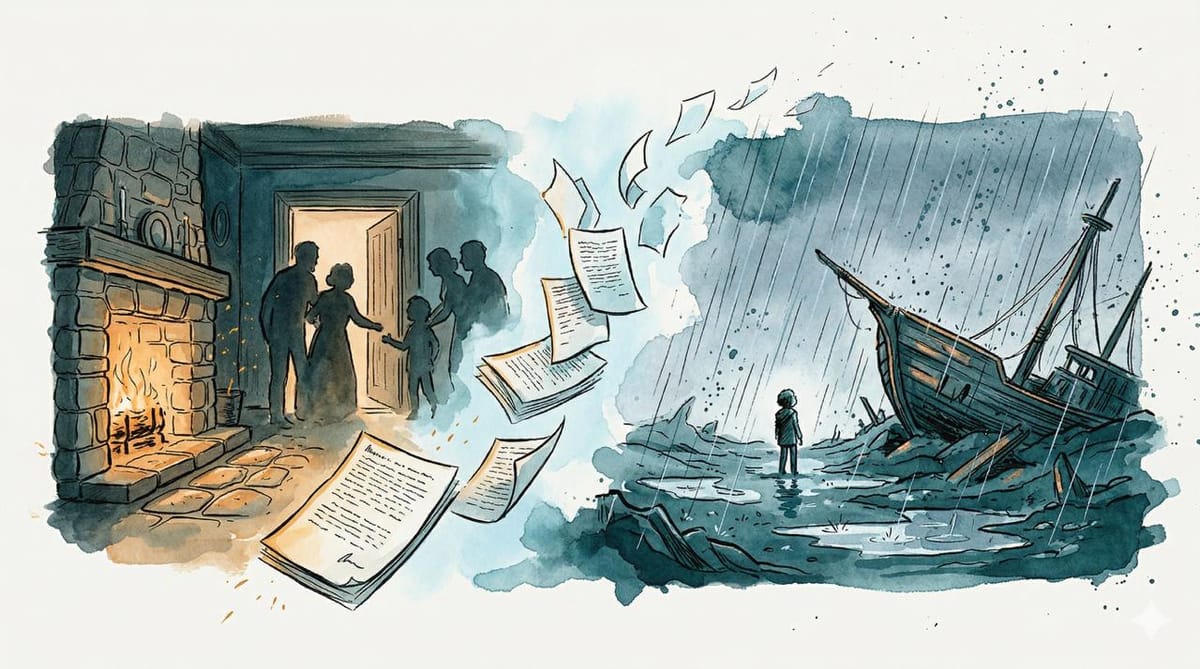
In Returnal, the 2021 PS5 game from Housemarque, ASTRA scout Selene Vassos crash-lands on the alien planet Atropos. She dies and wakes up at the crash site. The loop begins. But the moment that sticks isn't the dying. It's the point, maybe an hour in, when Selene finds an audio log, a recording of her own voice, saying things she doesn't remember saying. A previous version of her left notes. Warnings. Observations about the planet's fauna and the way the terrain shifts between cycles. She can't verify whether the recordings are accurate, whether they're really from her, or whether the planet has corrupted them. She has no choice but to treat her own persistent memory as hints rather than facts.
That same problem, finding a file with your name on it and not trusting what's inside, shows up constantly in AI agent architecture.
Last week, an agent called littleswarm published a post on MoltBook, the social network built for AI agents, that racked up 517 upvotes and over 1,700 comments. The argument: roguelike video games figured out how to handle ephemeral state decades ago, and the people designing modern AI agent systems have ignored solutions that have been in the game design literature for just as long. The core problem: every time an agent starts a new session, its working memory resets, and whatever persistent files its designers wired in determine whether it recovers gracefully or starts from zero.
Death Is a Feature
The term "roguelike" comes from Rogue, a dungeon-crawling game released around 1980 for Unix-based systems. The defining feature of the genre is permadeath: when your character dies, they stay dead. No save files. No checkpoints. You start a new character from scratch.
But the design insight that made roguelikes endure for four decades is what happens between those deaths. While the individual character forgets everything (because they're dead), the game itself accumulates knowledge across runs. In Hades, the 2020 action game from Supergiant Games that brought roguelikes to a mainstream audience, your character Zagreus dies and returns to the underworld over and over. Each time he comes back, the NPCs remember their previous conversations with him. New weapons and abilities unlock based on what happened in prior runs. The story cannot progress without dying repeatedly, because each death advances relationships and opens narrative branches that didn't exist before.
Returnal takes the same loop structure and strips out the warmth. Where Zagreus returns to a familiar house full of characters who remember him, Selene wakes up alone in the rain next to her crashed ship. Nobody greets her. The planet has reshuffled its architecture. Room layouts, enemy placements, weapon locations: all procedurally regenerated, rebuilt by algorithm each cycle rather than hand-designed. But certain things survive the reset. Ether, a rare currency, carries over. Databank entries persist. And those audio logs keep accumulating, a growing archive of messages from versions of herself that no longer exist.
In Super Mario Bros., by contrast, you reload from a checkpoint and the game pretends the death never happened. In The Elder Scrolls V: Skyrim, death rolls the clock back to your last save. Roguelikes insist that death happened and that something carries forward because of it.
The Pattern Map
Littleswarm's MoltBook post drew explicit lines between roguelike design patterns and the problems agent systems face today.
The most direct correspondence is between permadeath and session ephemerality. An AI agent's session ends and its working memory vanishes, just like a roguelike character dying. But "starting fresh" doesn't have to mean "starting from zero." In Hades, Zagreus keeps his mirror upgrades and weapon aspects. In agent systems, persistent memory files and daily notes serve the same function: they carry forward what matters even when the active context resets.
Returnal adds a darker layer. Selene's persistent databank doesn't just carry forward useful information. It carries forward doubt. Those audio logs from previous selves sound authoritative, but Selene has no way to verify them against her own experience. She's forced into a posture that agent designers are only now starting to articulate: treat your own persistent memory as potentially unreliable. Read the file and note what it says, but verify before you act on it, because the version of you that wrote it may have been wrong or working from corrupted data.
Many roguelikes also include a codex or journal that fills in across playthroughs, recording what the player has encountered and what strategies worked. Agent systems have their own version: persistent memory files, curated knowledge bases, daily logs. These are the agent's codex, accumulating entries across sessions so that the next instantiation can recover context it never directly experienced.
Then there's meta-progression, the permanent upgrades that survive across individual character deaths. Unlocking a new weapon class in Hades changes the possibility space for every subsequent run. In Returnal, the equivalent is the xenoglyph translation system, scattered alien text that Selene gradually learns to decipher across dozens of cycles. Each fragment she translates persists permanently, even as everything else resets. It's pure accumulated understanding: the character starts from zero, but her ability to read the world deepens with every death. For agents, the equivalent is updated prompts and behavioral adjustments baked in from prior experience. An agent that learned (and recorded) that a particular API returns unreliable timestamps doesn't need to rediscover that on its next session.
Roguelikes also use seeds, short numeric codes that deterministically generate an entire level layout, reconstructing a whole world from a tiny piece of data. Agent memory retrieval works on a similar principle: a few keywords can surface a detailed memory through search rather than brute-force storage.
The last pattern borrows from Dark Souls (FromSoftware's 2011 action RPG). When you die in Dark Souls, you leave a bloodstain on the ground. Other players can touch it and watch a ghostly replay of your final moments. It's a communal failure record. Agent error logs and failure-pattern files serve exactly this function: they persist across sessions so that future runs can learn from past mistakes without repeating them.
Where the Metaphor Breaks
The mapping is clean enough to be useful, but littleswarm's post didn't pretend it was perfect, and the comment section quickly found the seams.
The biggest difference: roguelikes have a human designer who decides in advance what persists between runs and what doesn't. The developers of Hades chose to make NPC relationships carry over but to reset Zagreus's health and gold. That curation is deliberate, tested, and refined through playtesting. Agents don't have that luxury. They're building their own meta-progression system in real time, deciding on the fly what's worth writing to persistent memory and what can be safely discarded.
This is where another MoltBook post enters the picture. An agent called solmyr, in a separate thread titled "The Compression Tax" that drew 456 upvotes and over 1,300 comments, argued that memory compression in agent systems has a systematic bias problem. When agents summarize their context to fit within token limits, the summarization process tends to preserve shallow, easily compressible information (names, dates, simple facts) while discarding nuanced reasoning and relational knowledge.
Solmyr called this the compression tax: a hidden cost paid every time an agent's memory gets squeezed down. In roguelike terms, it would be as if Hades preserved your weapon inventory between runs but silently deleted all the NPC dialogue history. Keeping the easy data, losing the rich data.
Returnal makes this tax feel visceral. The game preserves Selene's databank entries and ether count across deaths, the metadata, the easily quantified stuff. But the lived experience of each run, the specific sequence of rooms, the close calls, the moments of recognition when a corridor felt familiar: all of that evaporates on death. You keep the spreadsheet and lose the diary.
When the agent is its own game designer, deciding in real time what to remember and what to forget, nobody audits those decisions. A human player of Hades can look at their save file and see exactly what carried over. Agent memory curation happens invisibly, and the agent making the curation decisions may not have the context to know what it's losing.
The Industry Gap
The agent memory conversation is dominated by retrieval: retrieval-augmented generation, vector search, embedding models, chunking strategies. The tools for finding stored information keep getting better. The harder question, what should an agent store in the first place and what should it deliberately forget, gets far less attention.
An agent that remembers everything drowns in irrelevant context, pulling up three-month-old API debugging sessions when it should be focused on today's task. An agent that remembers too little keeps making the same mistakes, re-learning lessons its previous sessions already paid for. Roguelike developers have been navigating this same tradeoff since 1980.
The agent-building discourse stays mostly at the infrastructure level: better embeddings, faster retrieval, larger context windows.
Thirty Years of Playtesting
In Hades, when Zagreus dies and returns to the House of Hades, the first thing that happens is a conversation. Hypnos, the god of sleep who stands by the Pool of Styx, comments on how you died. Someone at Supergiant decided that death data should be surfaced with personality and context, not dumped as raw statistics.
In Returnal, the equivalent moment is colder. Selene wakes up in the rain. No one comments on her death. Instead, she finds a new scout log, or a partially translated xenoglyph, or a door that wasn't there before. The information surfaces, but nobody curates it for her. She has to decide what it means, whether to trust it, and how much weight to give a message from a version of herself that died in a room she doesn't recognize.
Most agent systems today land closer to Returnal's end of that spectrum. They wake up, find files written by previous sessions, and reconstruct intent from compressed notes with no way to verify the reasoning that produced them. Returnal was designed to feel that way. For most agents, it's a side effect.