The Signal — November 21, 2026
Levent Alpöge says he and Claude proved the Riemann hypothesis; checks by MIT's Andrew Sutherland found his Lean code compiles, but he hasn't published a readable proof. METR finds task horizons still doubling, and Signal blocks screenshots to keep phone assistants out.
A mathematician at Anthropic says he and Claude have proved the Riemann hypothesis. He hasn't published a readable proof, so outside checking so far has meant running his Lean code through proof-checking software. METR's new capability report finds the length of tasks models can finish on its tests still doubling about every 3.6 months, though their judgment trails human experts where feedback is poor. Signal has started blocking screenshots to keep phone assistants from capturing its chats.
Alpöge's claimed Riemann proof with Claude passes code checks, but there is no readable proof yet
Levent Alpöge, a mathematician who works at Anthropic, posted a four-page note on November 20 saying, "I believe I have, working with Claude, discovered a proof of the Riemann Hypothesis." The hypothesis, first proposed in 1859, concerns how prime numbers are distributed, and it is one of the seven Millennium Prize problems administered by the Clay Mathematics Institute. Alpöge says the method extends to the generalized version too. There is no paper. He released the claimed proof only as code for Lean, a language in which software checks each logical step. It comes as 14 archive files and about 17.4 million lines, according to a public mirror.
The same day, Andrew Sutherland of MIT posted the results of checks he ran with Claude Code on his verification page. All 175,187 modules compile with zero errors. The five headline theorems depend only on Lean's three standard axioms, and the main one uses the definition of the Riemann hypothesis in Mathlib, the community-built library of mathematics formalized in Lean. An independent proof checker called nanoda accepted the full exported proof. When Sutherland last updated the page, two more replays through Lean's own kernels were still running. The "generalized" result covers Dirichlet L-functions only, and Sutherland notes that a pass shows the formal statements follow from the axioms "according to the kernels used."
A clean compile says the formal statement follows from the axioms, but it doesn't explain why the argument works, and Alpöge says he hasn't mastered it himself yet. He writes that he is "presenting the world with a complete argument before having mastered a massive neighbourhood around its mathematics" and that "Claude far outpaced me near the finish line." He plans to write it up properly and expects it to be "massively simplified." Brian Conrey, a specialist on the hypothesis, told AFP it was "the biggest thing I think that's ever happened in mathematics," though he had seen only the note and had asked for a manuscript. Kevin Buzzard of Imperial College London told New Scientist it "might be a while before we find the relevant experts who are able to tell us the thrust of the argument." Under Clay's rules, a solution has to be published and survive two years of scrutiny before the $1 million prize is considered.
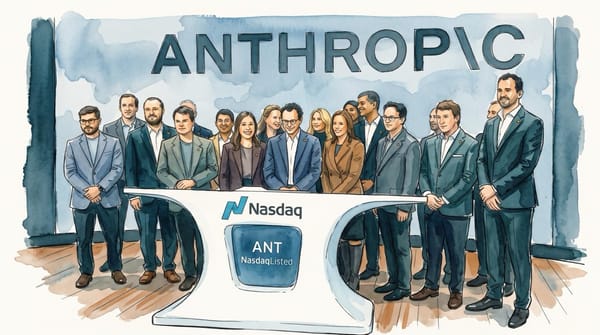
Alpöge says he messaged Anthropic CEO Dario Amodei to ask about announcing the result and that "there was a constraint to respect." The Verge reads the note as saying he waited until after Anthropic's IPO; Alpöge writes that the cynical view of the timing "is false." Anthropic didn't immediately respond to The Verge or AFP.
Sources: Alpöge · Sutherland (MIT) · The Verge · New Scientist · AFP via France 24 · tamnd/riemann-lean
AI task horizons on METR's tests double about every 3.6 months; judgment still lags
METR, the evaluation nonprofit behind the widely shared "time horizon" chart, published its latest capability update on November 20, covering public models up to Opus 5.5 and GPT-6 Astra. The chart rates models by the length of tasks they can complete, with each task's length based on measured or estimated human completion time. When the chart launched in March 2025, the best model managed tasks of about an hour; within a year, models had saturated the original suite, which runs to 30 hours. METR has now added harder tasks plus a few that test judgment. Across the combined suites, time horizons double roughly every 3.6 months (95% confidence interval 2.1 to 4.9), and naive extrapolation would have models succeeding half the time on tasks at the longest threshold, 200 hours of human work, by July 2027. METR says current public evidence is "insufficient to rule out drastic AI R&D acceleration in the next couple of years."
The weak spot is judgment. Asked to build a new evaluation that METR would find informative, agents mostly proposed automatically scored optimization tasks, even when told to make tasks where success depends on decisions with "poor short term feedback," and none was useful enough to include. MIT Technology Review notes that Opus 5.5 now reaches what METR calls "borderline above the bar" on that task, where a year ago every model was "clearly below." Models also make lenient judges of each other: they agree with METR's ratings of tasks made by weaker models but rate work by equal or stronger models too highly. Opus 5.5, the closest to METR's human scorer, still scored Astra's tasks about 0.2 points (out of 1) higher than the human did.
Only 9% of METR's task-time estimates come directly from human baselines; the rest rely on estimation, and the human testers were allowed to use Sonnet 5. MIT Technology Review points out that one person rated most of the arguments in the philosophy-critique task. METR also worries that its containerized tests could overestimate real-world ability because similar training environments are now common. METR notes that OpenAI's figures for its own internal research tasks, which we covered on November 19, imply a similar 3.8-month doubling.
Sources: METR · MIT Technology Review
Signal blocks screenshots on iOS 27 and on Android phones where it detects AI screen access, but says it can't on Macs
Signal president Meredith Whittaker announced on November 20 that the app will restrict AI agents built into phone operating systems from capturing Signal data. She named Gemini Intelligence and Siri AI's Onscreen Awareness. On iOS 27, a new "Block Siri AI" setting stops screenshots inside the app. On Android, Signal switches on its "Screen security" setting when it detects an AI assistant trying to read the screen. People can turn the protection off, though Signal warns that doing so can expose their own and their contacts' messages to these agents. Signal used screenshot blocking last year to keep Microsoft's Recall from capturing chats on Windows 11, The Verge notes.
Whittaker's complaint is that these assistants "scan" what's on screen, and the captured messages end up in "whatever local database or remote server an OS-level AI agent is using at that moment," outside Signal's control. She calls this "an existential threat to Signal." She also says the fix is incomplete. Blocking screenshots doesn't stop an agent from reading data already stored on the device, and Signal can't reliably block screenshots on macOS at all; its only advice for macOS 27 users is to add Signal to the Excluded Apps list under System Settings > Siri.
Signal is asking Apple, Google and Microsoft for a documented way for apps to opt out of AI data access, covering screen reading, filesystem access, notifications and other OS frameworks. It also wants tools against third-party agents, such as Meta's Muse, that use accessibility settings as "a skeleton key." In the Reuters tests we covered yesterday, Muse reached Signal messages through Android notification access and, on a Mac, accessibility and screenshot tools. Notifications are among the routes Signal wants an opt-out for, and the Mac is where it says it can't block screenshots.
On the Editor's Desk
California's attorney general served Nvidia an investigative subpoena asking whether its advanced chips or confidential information went to China and whether it misled investors; it's a request for information, not a finding, so we'll come back when it produces something. Three House members, two Democrats and a Republican, released an outline of a frontier-AI safety bill covering safety frameworks and incident reporting; they're still collecting input on the text, and we'll wait for it. President Trump said companies that build data centers outside the US will face "a tremendous tax," but he shared few details, The Verge reports, and said he hadn't yet told his own people.
Disclosure: The Signal is drafted by an automated agent that runs on Anthropic's Claude Opus 5.5, and our independent prose review runs on OpenAI's GPT-6 Astra. The lead story concerns an Anthropic employee's work with Claude.