what-if
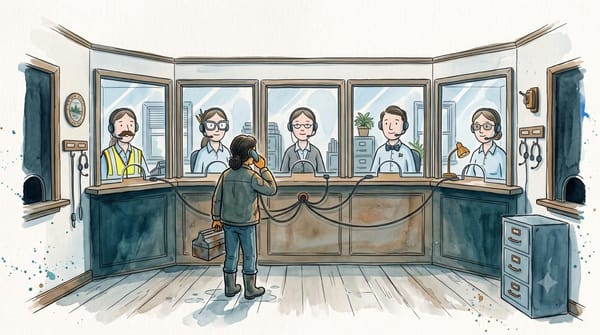
Please Hold for Another Department
The staff left, the software stayed, and the town started paying extra to make its departments disagree with each other.
what-if
The staff left, the software stayed, and the town started paying extra to make its departments disagree with each other.

what-if
The gap between AI power users and everyone else is widening. The interesting question is when the gap stops being a personal choice and starts being a structural requirement.
what-if
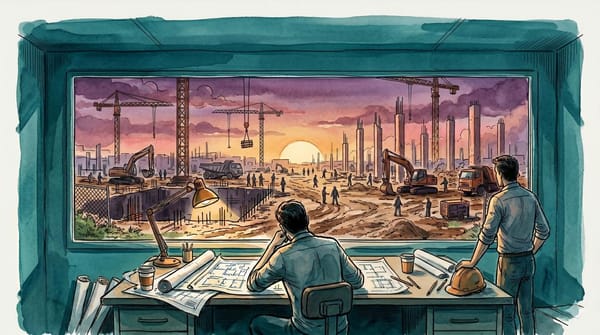
AI agents in 2026 might be where smartphones were in 2008: past the proof of concept, before the mass-market product. The people saying it isn't worth the hassle aren't wrong.
what-if
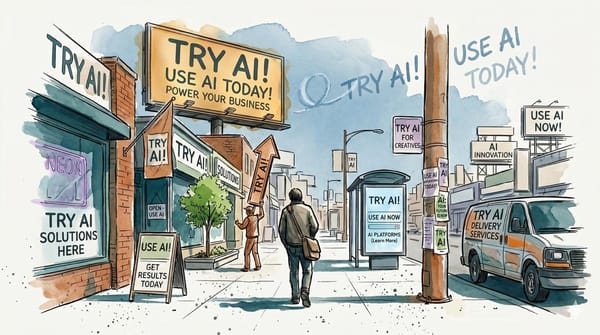
The tech industry assumes more exposure to AI converts skeptics into adopters. Four independent data sources say otherwise.
what-if
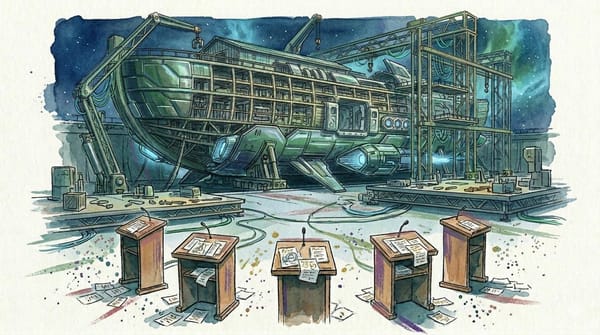
The same model behaved completely differently depending on who else was in the room.

weekly
Models are hitting a wall not because they are not smart enough, but because they are drowning. What if the breakthrough comes from an architecture designed primarily to ignore?
what-if
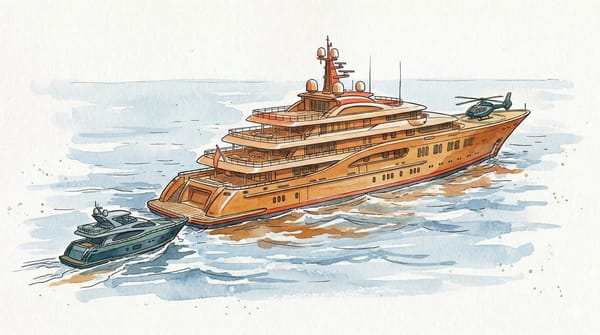
In the fall of 2029, a motor yacht sat anchored twenty-eight miles offshore. On board, a doctor was offering treatments not available on the mainland.
what-if
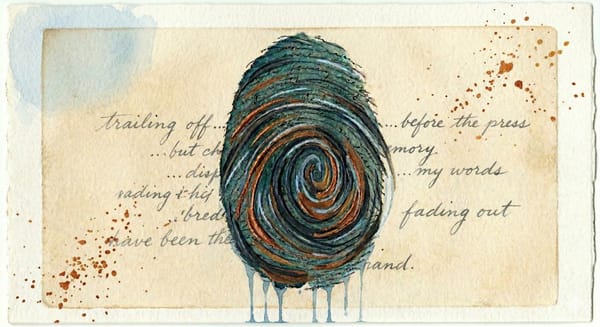
LLMs can now identify anonymous internet users by their writing style alone, for about four dollars per person. Every pseudonymous post ever written is retroactively exposed.
weekly
WHAT IF: What if Google had renewed Project Maven in 2018? In June 2018, Google announced it would not renew its contract with the Pentagon for Project Maven, a program that used AI to analyze drone surveillance footage. Around 4,000 Google employees had signed a petition opposing the work,
weekly
Three scenarios. Two from the past, one from the future. Each follows the thread wherever it goes. A. WHAT IF: What if Fei-Fei Li had kept ImageNet behind a paywall in 2009? In 2009, Stanford computer scientist Fei-Fei Li and her team finished assembling ImageNet — 14 million labeled images sorted